
Operations
The Coffee Shop Owner's Guide to Eco Packaging
August 27, 2025 · 6 min read
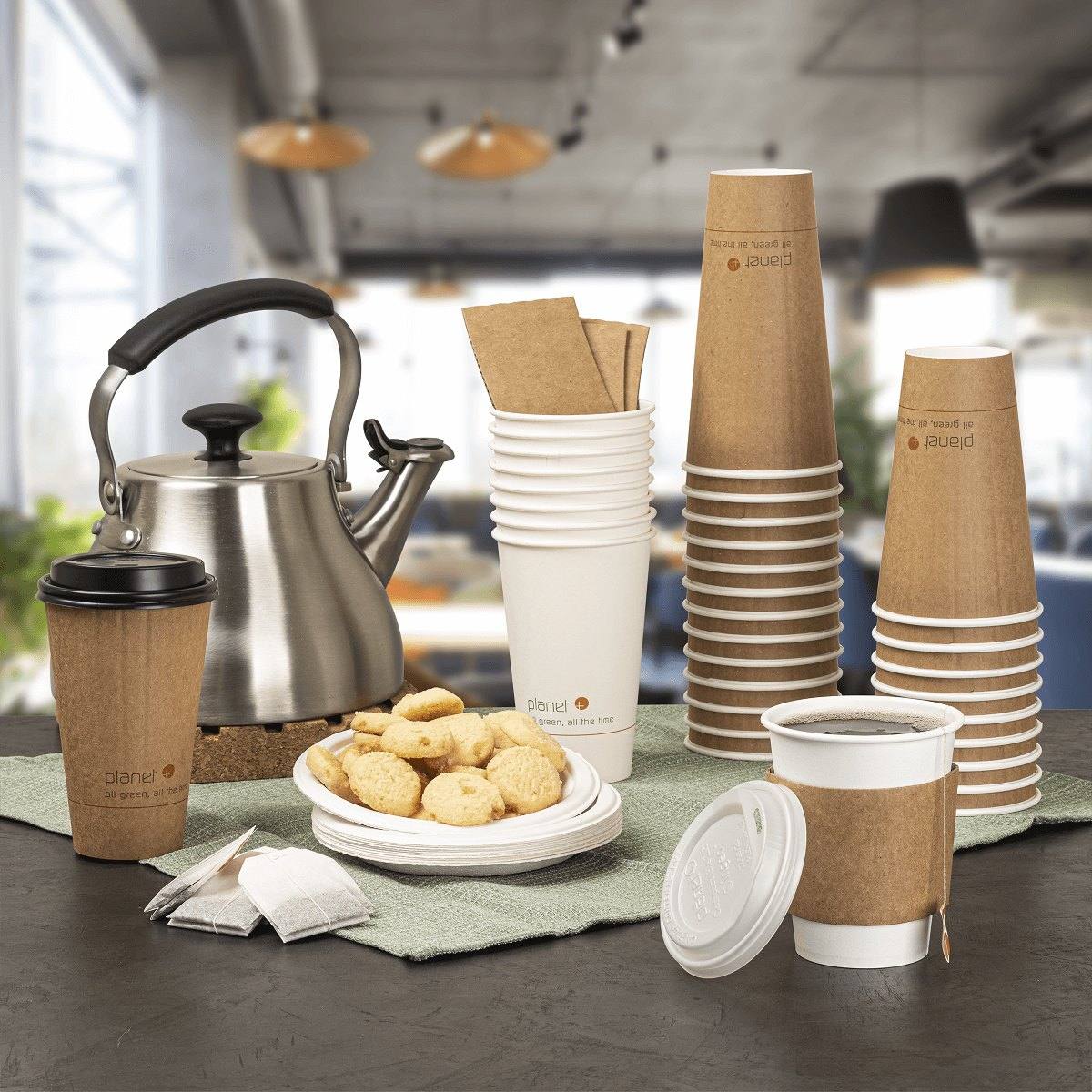
Coffee is one of the most packaging intensive categories in foodservice. Every drink pulls a cup, a lid, sometimes a sleeve, and sometimes a stirrer. Small choices multiply fast at 300 drinks a day.
Hot cups
Double walled paper cups lined with PLA meet ASTM D6868 and eliminate the traditional polyethylene lining. They hold heat well without a sleeve at eight ounces, and they compost cleanly at end of life.
Cold cups
Clear PLA cups look like PET, showcase milk foam layers beautifully, and meet ASTM D6400. Remember they soften above 105 degrees Fahrenheit, so keep them out of the dish pit.
Lids
CPLA lids handle espresso and hot drip temperatures. Confirm the lid family matches the cup, since a lid that fits a competitor's cup is not automatically leak proof on yours.
Sleeves
Recycled kraft paper sleeves add insulation and a natural surface for branding. Look for post consumer content of 60 percent or higher.
Stirrers
Birch wood stirrers are the workhorse. They cost less than plastic, look better, and compost without any special certification.
Bring your own cup
A small discount for reusable cups, even ten or fifteen cents, moves customer behavior faster than any signage program. Pair it with a compostable default and the packaging line on your P&L drops noticeably within a quarter.
Keep reading
What Does ASTM D6400 Actually Mean for Compostable Packaging?
If a product is labeled compostable, ASTM D6400 is usually the reason. Here is what the standard tests, why BPI certification matters, and how to spot greenwashing.
PFAS Free Foodservice Packaging: Why It Is Now the Baseline
By 2026, more than a dozen U.S. states restrict PFAS in foodware. Here is what changed, what to swap out, and how to verify a supplier's claims.