
Operations
Compostable Packaging for School Cafeterias: What Actually Works
September 16, 2025 · 6 min read
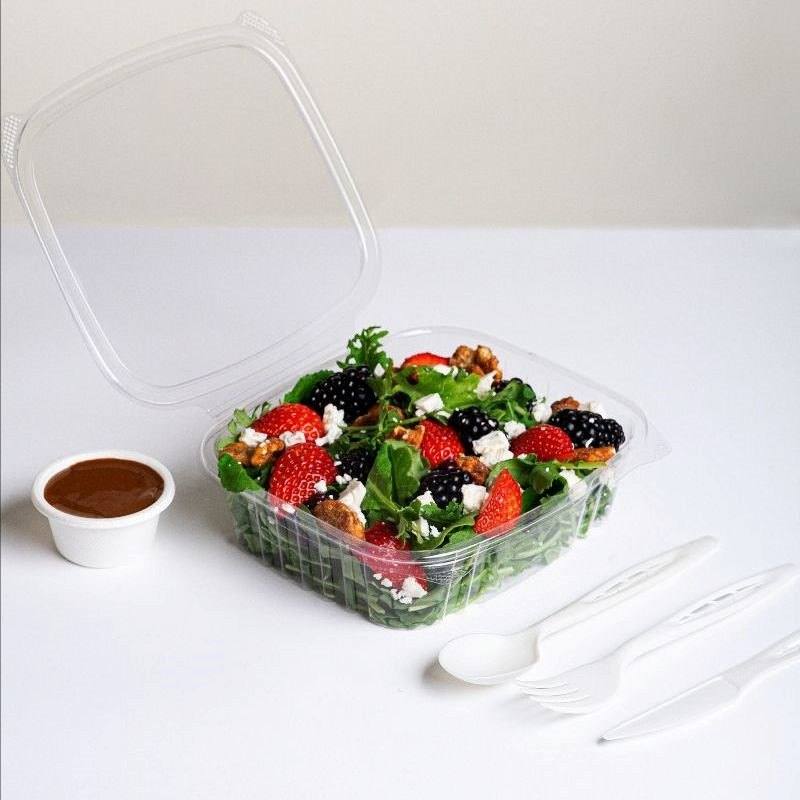
School foodservice is the hardest test any disposable will face. Thousands of trays move through a line in under 30 minutes, budgets are tight, and every student is happy to tell you when a bowl leaks. Here is what tends to work in K to 12 and university programs.
Compartment trays over flat plates
Molded bagasse trays with three or five compartments keep sauces off vegetables and simplify portioning. Look for trays rated to at least 200 degrees Fahrenheit so hot entrees do not soften the fiber.
Bowls beat plates for entrees
A 12 to 16 oz bagasse bowl handles pasta, chili, rice bowls, and stir fry without the sagging that plates suffer. Match with a compostable dome lid for grab and go service.
Fiber straws that do not collapse
Cheap paper straws turn to mush in five minutes. Look for straws made from compostable PLA or from thick walled paper spiral wound with a food safe binder.
Cutlery
PLA and CPLA cutlery works well for cold service. For hot meals, look for heat resistant CPLA rated to 200 degrees Fahrenheit or agave fiber cutlery that holds up to soup without warping.
Volume discounts
Compostable pricing improves sharply at pallet and truckload volumes. School districts that pool orders across multiple sites can typically match or beat plastic pricing on a landed basis.
Keep reading
What Does ASTM D6400 Actually Mean for Compostable Packaging?
If a product is labeled compostable, ASTM D6400 is usually the reason. Here is what the standard tests, why BPI certification matters, and how to spot greenwashing.
PFAS Free Foodservice Packaging: Why It Is Now the Baseline
By 2026, more than a dozen U.S. states restrict PFAS in foodware. Here is what changed, what to swap out, and how to verify a supplier's claims.